
7 Benefits of Raising a Bilingual Child: Language & Development
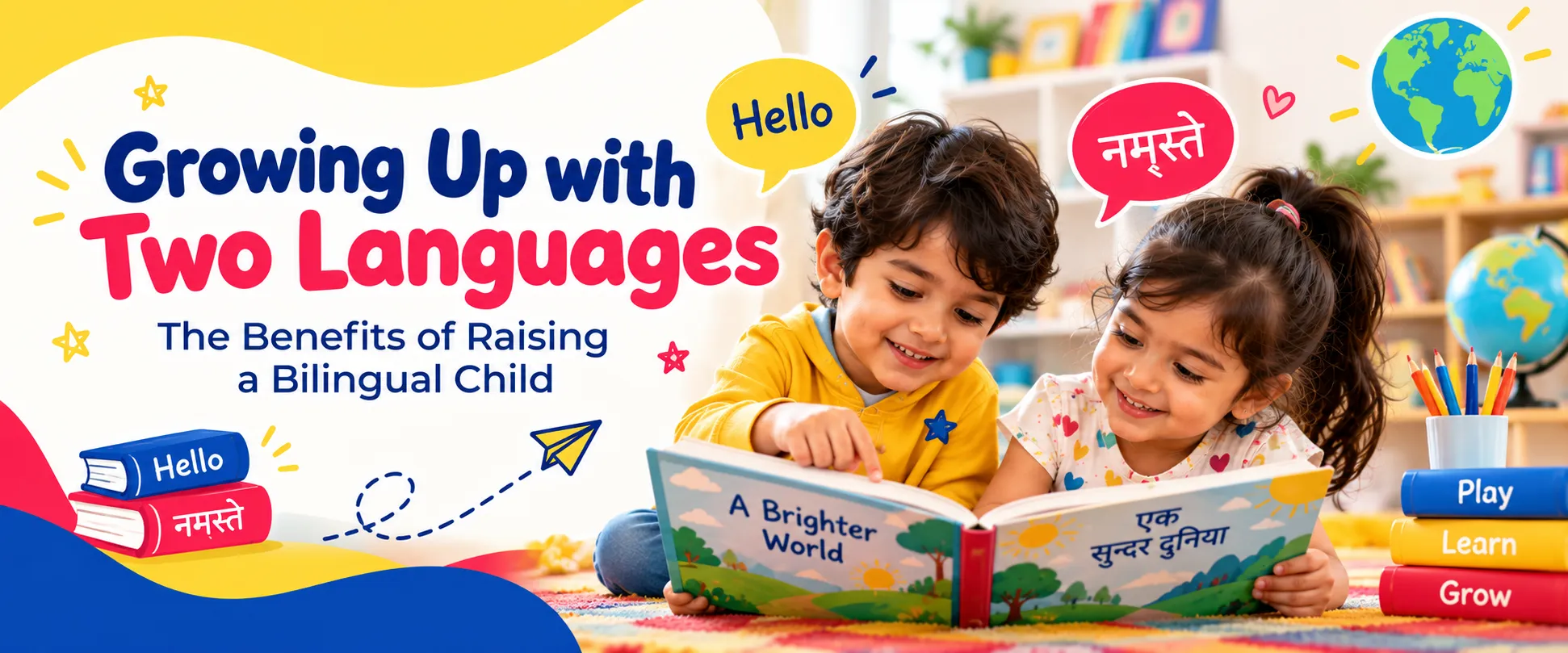
Discover the benefits of raising a bilingual child, from stronger communication and cognitive flexibility to cultural awareness, confidence and listening skills.




Raising a bilingual child can support communication, language awareness, cognitive flexibility, cultural understanding and confidence. Children can learn two languages through everyday conversations, stories, songs, play and meaningful interactions, without needing formal language lessons from an early age.
In today's interconnected world, knowing more than one language is a valuable life skill. But for young children, bilingualism is about much more than speaking two languages it nurtures cognitive development, strengthens communication skills, and deepens cultural understanding.
Many parents wonder whether introducing two languages might confuse their child. The good news is that young children are naturally equipped to learn multiple languages. In fact, the early years are the ideal time to begin.
Bilingualism in early childhood can give children regular opportunities to listen, communicate, switch between languages and understand different ways of expressing ideas. For parents, the key is not perfect language use but providing rich, positive and consistent exposure to both languages.
Bilingual language development is one part of early childhood development, alongside social, emotional, cognitive and communication development.
What Does It Mean to Be Bilingual?
A bilingual child is one who is exposed to and learns two languages from an early age. Some children hear one language at home and another at school, while others grow up in multilingual families where two or more languages are spoken regularly.
Children may not always use both languages equally, but consistent exposure helps them gradually understand and communicate in each one.
A bilingual child may understand one language better than another, use different languages in different settings, or have different levels of vocabulary in each language. This is normal. Bilingual development does not have to mean equal fluency in both languages at every stage.
Why the Early Years Matter for Learning Two Languages
The first five years of life are a period of remarkable brain development. During this time, children's brains are especially receptive to learning sounds, words, and sentence patterns from different languages.
Young children absorb language naturally through everyday interactions, songs, stories, conversations, and play. They do not need formal lessons to begin learning a second language they simply need meaningful exposure.
Young children encounter language naturally through relationships and everyday experiences. Conversations with family members, storytelling, singing, pretend play and interaction with other children can all provide meaningful opportunities to hear and use language.
Rather than focusing only on how many words a child knows in one language, parents can look at their overall communication and development across both languages.
Benefits of Bilingualism: How Learning Two Languages Can Support Children
Learning two languages can support children's communication, language awareness, cultural understanding and ability to navigate different social contexts. Research on bilingualism also explores potential links with executive-function skills, attention and cognitive flexibility, although outcomes can vary depending on factors such as language exposure, proficiency, age and the child's wider environment.
-
Stronger Communication Skills
Children who grow up hearing and using two languages often become skilled communicators. They learn to adapt their language depending on the person they are speaking to and the situation they are in.
Using two languages can also help children become aware that the same idea can be expressed in different ways. Over time, this can support communication across different people, settings and cultural contexts.
-
Cognitive Development Flexible Thinking
Research suggests that bilingual children often develop strong attention, memory, problem-solving, and flexible thinking skills. Switching between languages encourages the brain to think in different ways and strengthens executive functioning.
Bilingual children regularly manage information from more than one language system. This makes bilingualism an interesting area of research in relation to attention, cognitive flexibility, metalinguistic awareness and executive functioning. However, bilingual children are individuals, and benefits should not be presented as guaranteed outcomes for every child.
-
Greater Cultural Awareness and Connections
Language is closely connected to culture. Learning another language helps children appreciate different traditions, customs, and perspectives while strengthening their connection to their own heritage.
Language can also help children connect with family traditions, stories, communities and cultural identities. Maintaining a home language can be particularly meaningful for families who want children to communicate with relatives and stay connected to their heritage.
-
Better Listening Skills and Language Awareness
Bilingual children learn to distinguish between different sounds, accents, and speech patterns, helping them become attentive listeners.
Hearing two languages can expose children to differences in sounds, vocabulary, sentence patterns and ways of communicating. This can encourage children to pay attention to how language works and how people communicate in different situations.
-
Confidence in Communication and Learning
Successfully communicating in more than one language builds confidence and encourages children to embrace new learning experiences.
Successfully communicating with different people and using more than one language can also give children opportunities to develop confidence, independence and curiosity about new experiences.
-
Stronger Connection with Family and Community
For many families, bilingualism is closely connected to relationships. Speaking a family or heritage language can help children communicate with grandparents, relatives and wider communities. This can strengthen a child's sense of belonging while allowing family stories, traditions and cultural knowledge to be shared across generations.
-
Greater Awareness of Different Perspectives
Learning another language can introduce children to different expressions, stories, traditions and cultural perspectives. This can encourage curiosity and open-mindedness while helping children understand that people may communicate, celebrate and see the world in different ways.
Will Learning Two Languages Confuse My Child?
This is one of the most common concerns among parents, but the answer is no.
Bilingual children may sometimes use words from both languages in the same sentence or have different levels of vocabulary in each language. This does not by itself indicate confusion or language delay. A child's overall communication should be considered across both languages. If parents have concerns about speech or language development, they should discuss them with an appropriately qualified speech and language professional.
Does Learning Two Languages Confuse a Child?
No. Learning two languages does not inherently confuse a child. Mixing languages, sometimes called code-switching, can be a normal part of bilingual language development. Children may choose a word from one language when it comes more naturally or when that language is commonly used in a particular context.
Parents should focus on providing meaningful exposure and opportunities to communicate rather than expecting children to keep the languages perfectly separated at all times.
When Should a Child Start Learning a Second Language?
There is no single “perfect” age for learning a second language. Children can be exposed to additional languages from infancy, while older children can also become successful bilingual or multilingual learners. What matters most is the quality, consistency and meaningfulness of the language experience.
For young children, everyday communication, stories, songs, play and interaction can make second-language exposure natural and enjoyable.
How to Raise a Bilingual Child: 6 Practical Tips for Parents
- Speak Naturally
Use the language you are most comfortable speaking. Rich conversations are more beneficial than using a language you are less confident in.
- Read Books in Both Languages
Reading stories in each language helps children build vocabulary, understand sentence structure, and develop a love for reading.
- Sing Songs and Rhymes
Music makes language memorable. Nursery rhymes, action songs, and simple poems introduce new words in a fun and engaging way.
- Encourage Everyday Conversations
Talk during meals, while shopping, during walks, or while playing. Everyday experiences provide countless opportunities for language learning.
- Be Consistent
Consistency helps children understand when and how each language is used. Some families choose one language at home and another at school, while others assign one language to each parent. Find an approach that works naturally for your family.
- Keep Learning Fun
Avoid turning language learning into a test. Celebrate communication rather than correcting every mistake. Positive experiences motivate children to keep using both languages.
Remember that bilingual development is not a race. Children may understand more than they speak, prefer one language for a period of time or use different languages with different people. These patterns can change as their exposure and experiences change.
Should Parents Speak Two Languages at Home?
Yes. Families can use two languages at home in ways that feel natural and sustainable. Some families use one language with particular family members, while others use both languages throughout daily life. There is no single family model that works for everyone.
Parents should prioritise rich, comfortable communication rather than switching to a language they do not speak confidently simply because they believe it is better for language development.
How Can Parents Encourage Bilingual Language Development at Home?
Parents can encourage bilingual development by speaking regularly with children, reading books in both languages, singing songs, telling stories, playing games and involving children in everyday conversations. Consistent exposure to meaningful language is more useful than turning bilingual learning into a series of formal tests or drills.
What If My Child Mixes Two Languages?
Mixing two languages can be a normal part of bilingual development. Children may combine words or phrases from both languages because one word is easier to access, because a particular person or setting is associated with one language, or simply because they are communicating naturally.
Parents can model the language they want to encourage without making children feel that mixing languages is wrong.
Supporting Bilingual Development at Preschool
A preschool that values language rich experiences can play an important role in bilingual development. Storytelling, songs, role play, conversations, and interactive activities expose children to new vocabulary while encouraging confidence in speaking and listening.
When children feel supported and encouraged, they become more willing to experiment with language and express themselves.
A language-rich preschool environment can complement what children experience at home by providing opportunities for conversation, storytelling, collaborative play, songs and interaction with educators and peers. Parents can also ask how a preschool supports home languages, communication and children's individual language backgrounds.
What Are the Benefits of Raising a Bilingual Child?
The potential benefits of raising a bilingual child include stronger communication skills, greater language awareness, cultural connection, listening skills, confidence and opportunities to understand different perspectives. Bilingual children may also develop cognitive flexibility and executive-function skills, although research findings vary and outcomes are influenced by the child's language exposure and wider environment.
A Gift That Lasts a Lifetime
Raising a bilingual child is a journey, not a race. Every conversation, bedtime story, song, and shared experience contributes to your child's language development.
The goal isn't perfection it's communication, confidence, and connection.
By nurturing two languages from an early age, you're giving your child the opportunity to think more broadly, connect with different cultures, and thrive in an increasingly global world.
One language opens a door. Two languages open a world of possibilities.
At Kidzee, we believe young children thrive when learning is supported through meaningful relationships, communication, exploration and experiences that build confidence
Key Takeaways: Raising a Bilingual Child
• Learning two languages does not inherently confuse children.
• Bilingual children may naturally mix languages during communication.
• Bilingualism can support communication, language awareness and cultural connection.
• Potential cognitive benefits should be viewed as areas supported by some research, rather than guaranteed outcomes.
• Children do not need equal vocabulary or fluency in both languages at every stage.
• Parents can support bilingual development through conversation, books, songs, stories and play.
• Speaking naturally and confidently is more valuable than forcing a language approach that feels unnatural to the family.
• Bilingual development is a long-term process rather than a race to achieve perfect fluency.