
Circle Time in Preschool: 8 Benefits for Children | Kidzee
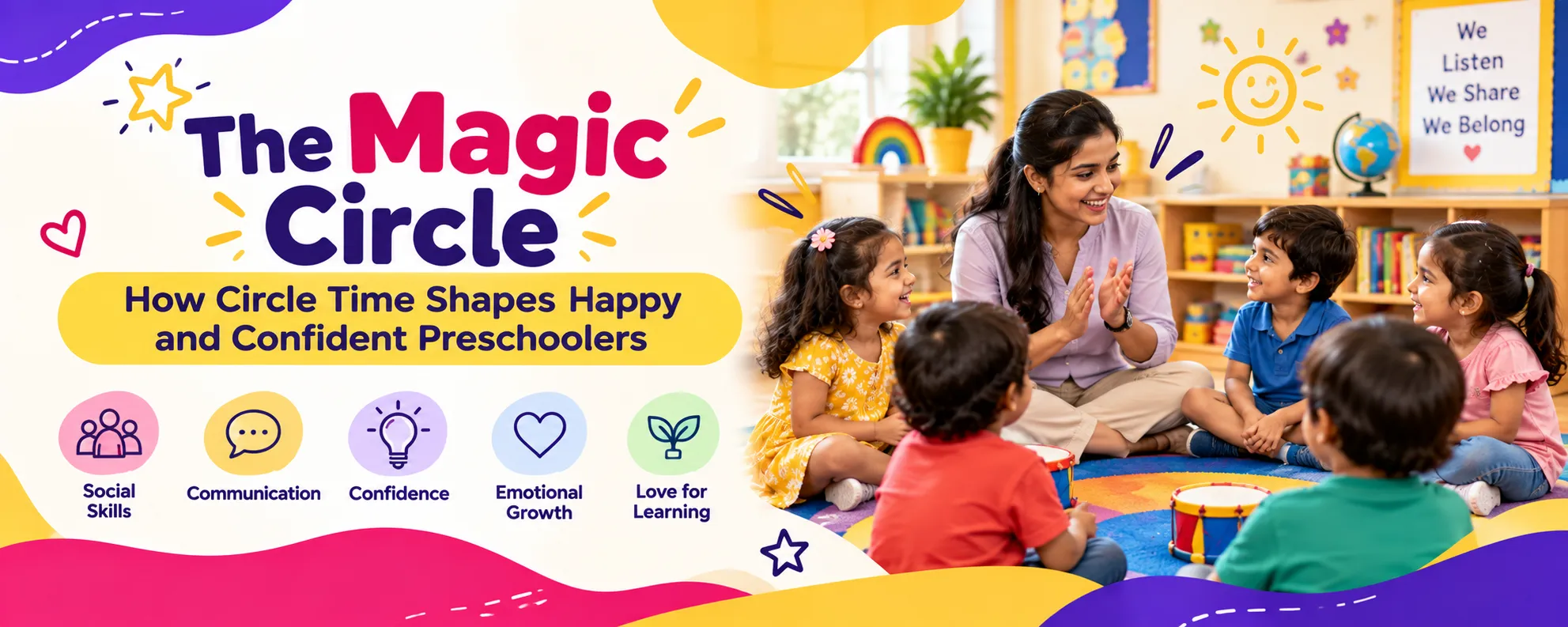
Discover 8 benefits of circle time in preschool, from language development and confidence to social skills and fun group activities. Explore learning at Kidzee.




Circle time is often the heart of a preschool classroom. It is the moment when children come together to sing, talk, listen, share ideas, and prepare for the day's learning. While it may seem like a simple daily routine, circle time in preschool plays a significant role in developing children's social, emotional, language, and cognitive skills.
Circle time in preschool is a group learning routine in which children gather with their teacher to participate in songs, stories, conversations, movement activities and shared discussions. Its benefits include developing communication and listening skills, encouraging social interaction, building confidence, supporting emotional awareness and introducing new concepts in an engaging way.
A well-planned circle time creates a warm and welcoming environment where every child feels included, heard, and valued. Let's explore why this daily gathering is one of the most important parts of the preschool day.
1. Builds a Sense of Belonging
Circle time gives children the opportunity to come together as one community. Greeting friends, singing welcome songs, and participating in shared conversations help children feel connected to their classmates and teachers. This sense of belonging makes children feel safe and confident in the classroom.
Simple activities such as greeting each child by name, sharing a favourite experience or singing a welcome song can help children feel recognised and included.
2. Develops Communication Skills
One of the greatest circle time benefits is the development of language. Children learn to express their thoughts, answer questions, listen to others, and build their vocabulary. Whether discussing the weather, sharing weekend experiences, or talking about a story, every conversation strengthens communication skills.
Teachers can encourage language development by asking open-ended questions such as, "What do you think will happen next?" or "Can you tell us more about your idea?" Children can participate using words, gestures or other age-appropriate forms of communication.
3. Encourages Active Listening
Listening is an important life skill, and circle time provides daily opportunities to practice it. Children learn to wait for their turn, follow simple instructions, and pay attention while others are speaking. These habits support better learning across all classroom activities.
Short listening games, action songs and activities that involve following simple directions can help children practise attention and listening in a playful, age-appropriate way.
4. Supports Social and Emotional Growth
During circle time, children learn how to interact respectfully with others. They practice sharing, taking turns, showing empathy, and understanding different perspectives. These social interactions help build emotional intelligence and positive relationships.
A simple feelings check-in, where children choose a picture or word to describe how they feel, can also help them begin recognising and expressing emotions. Participation should be encouraged without pressuring children to share personal feelings publicly.
5. Makes Learning Fun Through Group Activities
Interactive songs, movement games, storytelling, rhymes, and discussions make group activities in preschool both enjoyable and meaningful. Children stay engaged while learning new concepts such as colours, numbers, letters, seasons, community helpers, and healthy habits.
Learning together also motivates children to participate with confidence and curiosity.
Some engaging preschool circle time activities include:
- Welcome songs: Help children settle in and feel part of the group.
- Storytime discussions: Encourage imagination, vocabulary and comprehension.
- Weather and calendar chats: Introduce everyday concepts and new words.
- Action rhymes: Combine movement, listening and language.
- Show and tell: Give children opportunities to describe an object or share an idea.
- Guessing games: Encourage observation, curiosity and critical thinking.
Activities should be adapted to children's ages, interests, attention spans and communication needs.
6. Strengthens Classroom Routines
Consistent classroom routines for kids help children know what to expect each day. Beginning the morning with circle time creates structure and predictability, making transitions smoother and reducing anxiety. Children become more independent as they learn the daily rhythm of the classroom.
7. Boosts Confidence
Circle time provides many opportunities for children to speak in front of their peers in a supportive environment. Whether answering a question, singing a rhyme, or sharing an idea, these small moments gradually build confidence and self-esteem.
Even quiet children often become more comfortable participating as they experience encouragement and positive reinforcement.
Teachers can offer different ways to join in, such as speaking, pointing to a picture, choosing a song or participating in a movement activity. This allows children to build confidence at their own pace.
8. Introduces New Learning in an Engaging Way
Teachers often use circle time to introduce weekly themes, picture books, objects, songs, and real-life experiences. Hands-on discussions spark curiosity and encourage children to ask questions, make observations, and connect new ideas with what they already know.
For example, a teacher introducing a unit on plants might show children a seed, invite them to describe its features and ask what they think it needs to grow. This creates an accessible starting point for further exploration and inquiry-based learning.
Tips for an Effective Circle Time
- Keep sessions short and age-appropriate.
- Include songs, movement, and visual aids.
- Encourage every child to participate.
- Use open-ended questions to promote thinking.
- Maintain a predictable routine while keeping activities fresh and engaging.
- Balance teacher-led discussion with opportunities for children to move, respond and explore.
- Observe children's engagement and adjust the pace or activity when needed.
There is no single ideal duration for every preschool group. Circle time should suit the children's developmental stage, attention, interests and needs. Younger children may benefit from shorter gatherings with songs and movement, while older preschoolers may be ready for longer discussions and storytelling. Teachers can divide longer sessions into smaller activities and adjust the pace when children need a change.
Circle time is much more than children sitting in a circle it is where friendships begin, communication grows, and curiosity flourishes. Through meaningful conversations, engaging activities, and consistent routines, children develop the confidence and skills they need for lifelong learning.
A positive preschool experience gives children opportunities to learn through interaction, exploration and play. Parents exploring early childhood education can learn more about Kidzee's preschool programmes and curriculum to understand the learning experiences designed for young children.
A thoughtfully planned circle time in preschool creates joyful learning experiences that support every aspect of a child's development. When children feel connected, listened to, and encouraged, they are ready to explore the world with confidence and enthusiasm.