
Morning Routine Chart for Kids: 7 Benefits | Kidzee
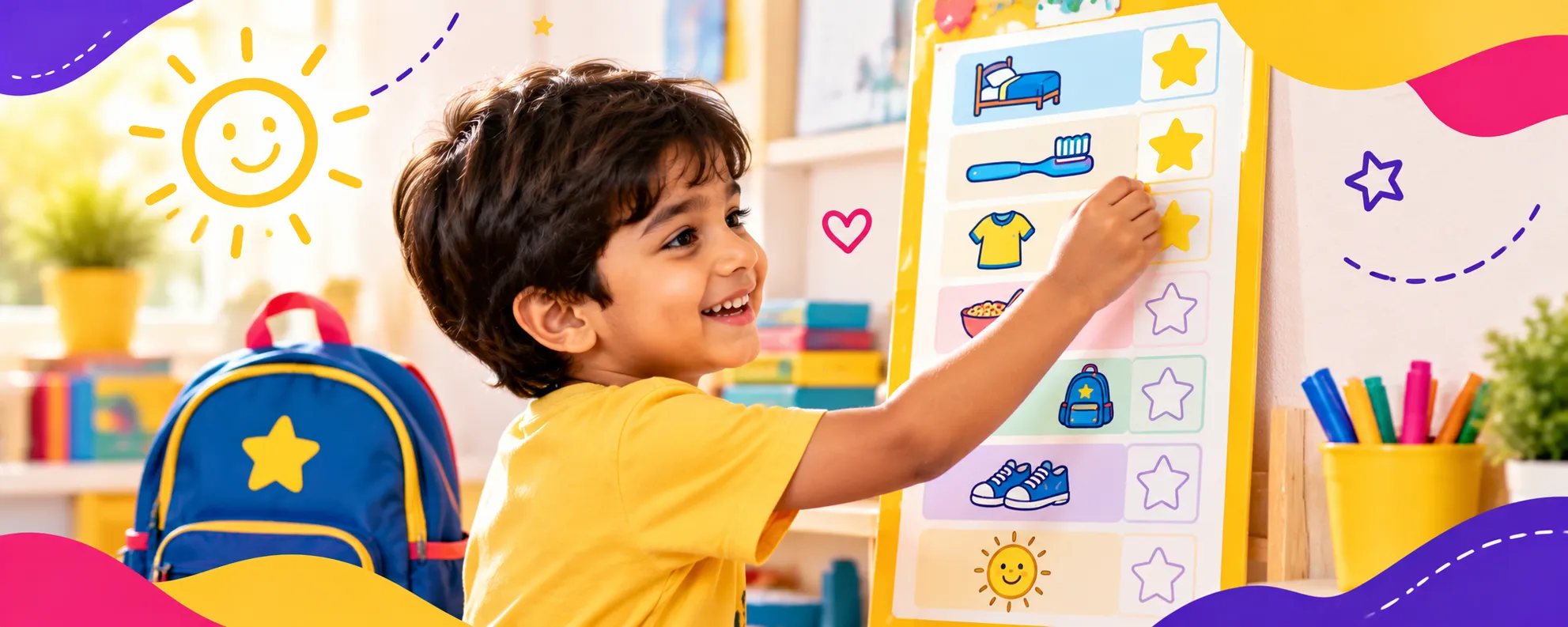
Make mornings easier with a morning routine chart for kids. Discover 7 benefits, simple steps and ideas to help children build independence and healthy habits.




Mornings can often feel rushed, especially when parents are trying to get children ready for school. From brushing teeth and getting dressed to eating breakfast and packing a school bag, there are many tasks to remember. This is where a morning routine for children can make all the difference.
A simple routine chart gives children a clear visual guide for what they need to do each morning. Instead of constant reminders, children learn to complete tasks independently, helping mornings become calmer, happier, and more organized.
A morning routine chart for kids is a visual checklist that shows children the steps to follow at the start of the day. It can include brushing their teeth, getting dressed, eating breakfast and preparing their school bag. By making the sequence easy to understand, a routine chart can help children practise independence, develop responsibility and build consistent daily habits.
Let's explore why children routine charts are an essential tool for building independence and creating positive daily habits.
1. Creates a Predictable Start to the Day
Children thrive on routine. Knowing what comes next helps them feel secure and confident. A consistent morning routine for children reduces confusion and anxiety because children know exactly what is expected of them.
When the same routine is followed every day, children become more prepared for school and begin the day with a positive mindset.
Try keeping the order of morning activities consistent, even when the timing changes slightly. A familiar sequence can help children understand what comes next without needing repeated instructions.
Parents exploring early childhood learning can discover Kidzee and learn more about its preschool offering.
2. Encourages Independence
One of the greatest benefits of a children routine chart is that it allows children to complete tasks without relying on constant reminders from adults.
As they check off each activity, children develop confidence in their ability to manage simple responsibilities on their own. This sense of independence continues to grow over time.
Start with tasks your child can already do, such as putting on shoes or placing a water bottle in their school bag. Introduce more steps gradually as their abilities develop. Younger children may need help, picture prompts or encouragement along the way.
Supporting independence is also an important part of helping children become confident learners.
3. Teaches Responsibility
Following a daily schedule for children helps children understand that every task has a purpose. Whether it's making the bed, brushing teeth, or packing their water bottle, completing these small responsibilities teaches accountability and self-discipline.
These habits gradually become part of their everyday routine.
Give children responsibility for one or two age-appropriate tasks at a time. A child might put dirty clothes in the laundry basket or check that their shoes are ready. Praise their effort rather than expecting every task to be completed perfectly.
4. Reduces Morning Stress
Busy mornings often lead to repeated instructions and last-minute rushing. A visual routine chart acts as a friendly reminder, helping children move smoothly from one activity to the next.
Instead of asking, "What do I do now?", children can simply look at the chart and continue independently.
The result is a calmer morning for both children and parents.
If a task regularly causes frustration, consider whether the routine is too complicated or rushed. Allow extra time for activities that your child finds difficult and remember that some mornings will not go exactly to plan.
5. Builds Time Management Skills
Although young children may not yet understand clocks, following a sequence of activities teaches the concept of order and time. Over time, they learn that certain tasks happen before others and begin to complete them more efficiently.
This early understanding of routines supports better organization as children grow.
Use simple phrases such as "First, we get dressed; then, we eat breakfast." For children who are ready, a visual timer can help them understand how long an activity lasts without turning the morning into a race.
6. Makes Learning Fun with Visuals
Young children respond well to pictures and symbols. A printable routine chart for children with colourful illustrations allows even non-readers to follow the routine independently.
Simple pictures of a toothbrush, breakfast plate, school bag, shoes, or water bottle help children understand each step without needing to read words.
7. Promotes Healthy Habits
A well-designed morning routine chart can include important daily habits such as:
- Wake up on time
- Brush teeth
- Wash face
- Get dressed
- Eat a healthy breakfast
- Pack the school bag
- Wear shoes
- Say goodbye with a smile
Practicing these habits every day helps children build healthy routines that last a lifetime.
Keep hygiene and safety steps age-appropriate. Young children may still need adult supervision when brushing their teeth, choosing suitable clothing or handling food and drinks.
How to Create a Routine Chart
If you're wondering how to create a routine chart, keep it simple and age-appropriate.
Here are a few easy tips:
- Include only 5–8 morning tasks.
- Arrange activities in the order they happen.
- Use colourful pictures or icons.
- Keep the chart at your child's eye level.
- Let children place a sticker or tick mark after completing each task.
- Celebrate consistency rather than perfection.
The goal is to encourage independence not create pressure.
Involve your child when choosing the tasks. Explain each picture and practise the routine together before expecting them to follow it independently. If the chart feels overwhelming, remove a few steps and add them back when your child is ready.
Making Routine Charts More Engaging
Children are more likely to follow routines when they feel involved. Allow them to:
- Choose the colours for the chart.
- Decorate it with stickers.
- Draw pictures for each task.
- Help decide the order of activities.
When children help create the routine, they feel a greater sense of ownership and motivation.
You can make the chart reusable by laminating it or placing it in a clear sleeve and using a wipe-clean marker. Alternatively, use removable picture cards or a simple paper checklist. Choose whichever format is easiest for your family to maintain.
A morning routine chart is much more than a checklist it's a tool that helps children build independence, responsibility, confidence, and healthy habits. By following a predictable routine, children learn important life skills while making mornings smoother for the whole family.
Whether you use a handmade chart or a printable routine chart for children, the key is consistency. A few simple daily habits can turn rushed mornings into calm, confident starts, setting children up for success both at home and at school.
Helping Every Morning Begin on a Positive Note
A morning routine chart is much more than a checklist. It is a tool that can help children practise independence, responsibility, confidence and healthy habits. By following a predictable routine, children learn important everyday skills while making mornings more manageable for the whole family.
Whether you use a handmade chart or a printable routine chart for children, the key is consistency, encouragement and flexibility. A few simple daily habits can turn rushed mornings into calmer starts, helping children feel more prepared for the day ahead.
Building positive habits starts with supportive experiences at home and continues as children explore, play and learn. Parents can visit Kidzee's official website to explore its preschool offering.
Exploring preschool options for your child?
Learn more about Kidzee's approach to early childhood education, explore the preschool programmes and curriculum, and find information to help you choose the right next step for your child.